

Home > Company News
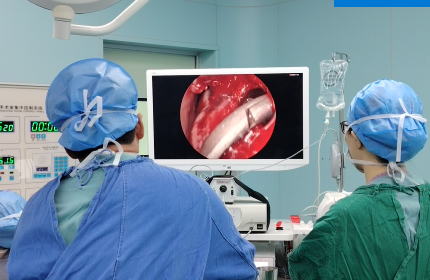
It is not a single procedure. A clinician uses a small endoscope to inspect the nasal cavity, identify the bleeding source, and then apply targeted packing, chemical cautery, electrocautery, radiofrequency or coblation, or another focused technique as appropriate. The goal is to reduce blind intervention and concentrate treatment on the true source.
The nose is sensitive, so endoscopy may cause pressure, stinging, or an urge to sneeze. Topical anesthesia is commonly used, and local anesthesia, sedation, or operating-room anesthesia may be selected according to bleeding severity and treatment extent. Short-term congestion, mild discomfort, and crusting are common after treatment. Worsening pain or fever warrants reassessment.
When the source can be identified, focused endoscopic treatment may reduce unnecessary full-cavity packing and preserve more airflow. Appropriate packing remains important when bleeding is heavy, a clear field cannot be established, or temporary stabilization is needed. The approaches are not mutually exclusive; a clinician may control bleeding with packing first and perform endoscopic evaluation and definitive treatment later.
• Bleeding continues despite proper compression or returns soon after packing.
• Bleeding repeatedly occurs on the same side or clots frequently pass into the throat.
• A posterior source is suspected and anterior examination does not identify it.
• Previous nasal surgery, complex anatomy, or concern for a local lesion requires a more complete examination.
Any cautery or energy device can produce local thermal injury. The clinician limits the treatment field, controls depth, and avoids deep cautery at corresponding locations on both sides of the septum to reduce crusting, adhesions, and septal perforation. Settings must reflect the specific device and tissue response; an equipment-independent fixed number is not appropriate.
Yes. Nasal dryness, nose picking, forceful blowing, poorly controlled blood pressure, anticoagulant use, a coagulation disorder, or an unrecognized local lesion may increase recurrence. Moisturization, avoidance of early trauma, scheduled follow-up, and management of underlying factors reduce risk but cannot guarantee that bleeding will never return.
No. Interrupting an anticoagulant or antiplatelet drug may increase the risk of stroke, myocardial infarction, or thrombosis. The prescribing clinician and ENT team should decide whether to continue, adjust, or temporarily withhold treatment after balancing bleeding severity and thrombotic risk. Bring the medication name, dose, and time of the most recent dose to the visit.
Seek urgent care when heavy bleeding continues after pinching the soft nose firmly for 10 to 15 minutes, blood keeps running into the throat, dizziness, fainting, chest discomfort, or breathing difficulty occurs, bleeding follows trauma, or bleeding is difficult to control while taking an anticoagulant. Do not tilt the head back and swallow blood, and do not attempt deep packing or cautery at home.

+86-13167065777
Building 5A, No. 9628, Hunan Highway, Pudong New Area, Shanghai, China
 Links:
Shanghai Shiyin Photoelectric Instrument Co.,Ltd. All Right Reserved